
What Causes Anti-Social Behavior in Teens and What Parents Can Do
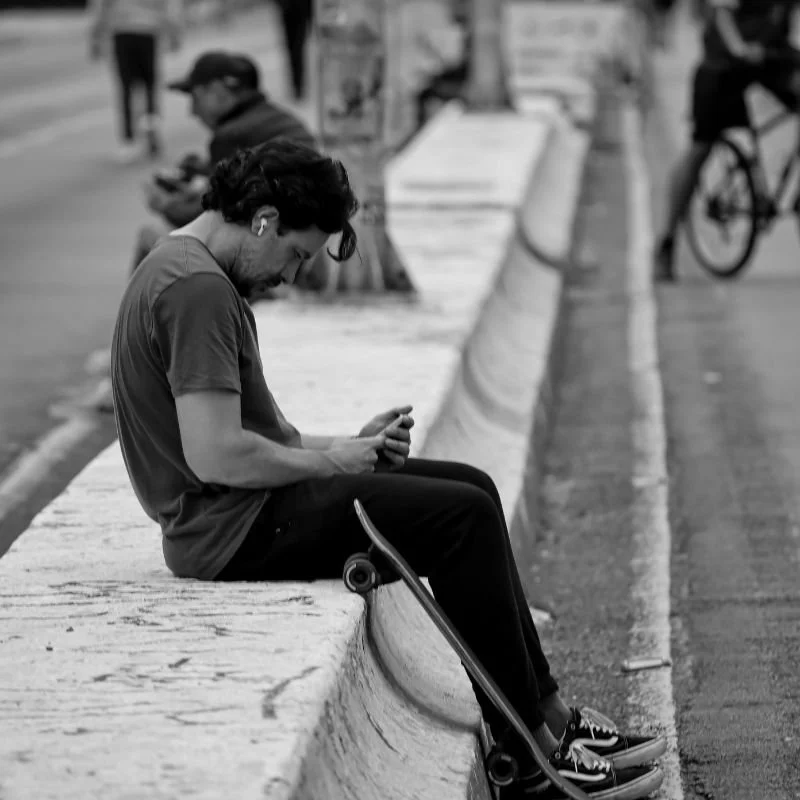
As a therapist, I often meet parents who feel confused or worried about changes in their teenager’s behavior. And if you're reading this, there's a good chance you're watching your teenager become someone you don't quite recognize. The child who used to talk to you freely is now distant. The one who had friends and interests seems to have closed off. Or perhaps what you're seeing is harder to name: a coldness, a pattern of cruelty, a disregard for rules or other people's feelings that goes beyond typical teenage moodiness. And underneath your worry, there may be a quiet fear: Did I miss something? Is this my fault? Will my child be okay?
First, take a breath. The fact that you're asking these questions already tells me something important about you as a parent. You're paying attention, and you care deeply. Anti-social behavior in teens is rarely a reflection of a "bad kid" or a failed family. It is almost always a signal, a behavior pattern communicating something the teenager hasn't yet found words for. Understanding what's driving the behavior is the first and most important step toward helping them.
What is “Antisocial Behavior” in Teens Really Means
One of the biggest misconceptions I encounter is confusion around the word “antisocial.” This term gets used loosely, as many people assume it simply means a teen who is quiet, introverted, or socially withdrawn. And this confusion can lead parents to either panic unnecessarily or miss something that genuinely needs attention.
But in clinical terms, antisocial behavior in teenagers refers to patterns of behavior that may include aggression, rule-breaking, disregard for others’ safety, or difficulty respecting boundaries.
Clinically, antisocial behavior exists on a spectrum. At one end, you have situational acting out. Further along, you encounter conduct disorder, a diagnosable pattern of aggression, deceit, and rule violation. Understanding where your teen falls on that spectrum matters, both for your own clarity and for getting them the right kind of support.
Signs of Antisocial Behavior in Teens
Antisocial behavior in adolescence doesn't always look the way people expect. Sometimes it's loud and obvious. Sometimes it hides behind academic achievement or a charming exterior that only cracks at home. Here are the signs worth paying attention to:
Frequent lying, manipulation, or deception, particularly when there's no apparent gain
Persistent rule-breaking at home, school, or in the community, regardless of consequence
Verbal, emotional, or physical aggression toward family members, peers, or authority figures
A visible lack of remorse after hurting someone, not just defensiveness, but genuine indifference
Withdrawing from positive peer relationships and gravitating toward risky or harmful influences
Consistently blaming others and refusing any form of accountability
Cruelty toward animals or younger children, which is a serious red flag that warrants immediate professional attention
And then there are the subtler signs, especially in high-achieving teens who appear to be managing just fine on the outside: emotional coldness that presents as maturity, sarcasm used as a weapon rather than humor, or a manipulative quality in close relationships that only the people nearest to them ever see. These teens often fly under the radar precisely because their grades or achievements make adults assume they're okay. They frequently are not.
What Causes Antisocial Behavior in Teens?
There is never a single cause. What we almost always find is a combination of factors, biological, environmental, relational, and experiential, that interact over time. Here is what research and clinical practice both point to.
1) Adverse Childhood Experiences (ACEs)
Adverse Childhood Experiences, including abuse, neglect, witnessing violence, household instability, and loss of a caregiver, don't disappear when a child grows older. They get stored in the nervous system and the body, shaping how a young person relates to the world, to authority, and to other people. Early trauma disrupts the development of secure attachment, impairs emotional regulation, and stunts the natural growth of empathy. A child who learned early that the world is unsafe, that adults can't be trusted, or that vulnerability leads to pain will often enter adolescence with a nervous system primed for threat and a behavioral repertoire designed to protect against it.
If your teenager's acting out feels disproportionate, reactive, or rooted in a kind of pain you can't quite identify, adverse childhood experiences, even ones that seem distant or "not that bad," may be playing a significant role.
2) Teenage Brain is Developing Under Stress
Something no one tells parents enough: the teenage brain is, neurologically speaking, a work in progress. The prefrontal cortex, the part of the brain responsible for impulse control, empathy, long-term thinking, and decision-making, isn't fully developed until the mid-20s.
Now add chronic stress or trauma to that already-vulnerable developmental window. Research shows that prolonged stress increases the reactivity of the amygdala (the brain's threat-detection center) while impairing prefrontal cortex functioning. The result is a teenager who is more reactive, more impulsive, less able to pause before acting, and less able to read other people's emotional cues accurately.
This is why telling a dysregulated teenager to "just calm down" or "think about your choices" rarely works. You're asking a part of the brain to function that stress has effectively taken offline. Understanding this doesn't mean accepting harmful behavior. It means intervening in ways that actually address the root cause.
3) The Role of Family and Environment
Family dynamics also play a powerful role in shaping behavior. Teenagers absorb everything that happens around them, even when no one is talking directly to them.
Factors that research consistently links to antisocial behavior include: inconsistent discipline, emotional unavailability, harsh or authoritarian parenting, chronic marital conflict in the household, parental substance use, and parental mental health struggles that go unaddressed. Teens don't only learn from what they're told. They learn from what they witness and live inside of every day.
In some situations, a teen may appear to be a teenager with no social life, withdrawing from peers and activities that once felt meaningful.
Peer belonging becomes one of the most powerful forces in a young person's life, arguably more influential than parental approval. When a teen is rejected by positive peer groups, whether through bullying, social exclusion, or simply not fitting in, the pain of that rejection can be profound. And when positive belonging isn't available, teens will often seek belonging wherever they can find it, including in peer groups that reinforce and escalate risky or antisocial behavior.
What makes this particularly complex is that antisocial behavior is both a cause and a consequence of peer rejection. A teen who acts out gets excluded. Social isolation can sometimes accompany emotional distress or anxiety.
4) Social Media and Digital Isolation
We cannot talk about teenage antisocial behavior without honestly addressing what's happening in digital spaces, and this is an area where most resources are still scratching the surface.
There are instances where online environments frequently normalizes cruelty through anonymous commenting, competitive social comparison, public humiliation, and the gamification of social status. Teens who experience cyberbullying, whether as targets or participants, carry those dynamics offline.
Chronic digital isolation, where a teenager replaces real-world connection almost entirely with screen-based interaction, quietly atrophies the social and emotional skills that healthy relationships require.
5) School Environment and Academic Pressure
Academic failure and learning differences also play a role especially for high-achieving teenagers. When a teen consistently experiences school as a place of shame, where they can't keep up with the pressure, where their struggles are visible, where they feel fundamentally inadequate, acting out becomes a way of controlling the narrative. Being the kid who doesn't care is less painful, in the short term, than being the kid who tries and keeps failing. For some high-achieving teens, the pressure runs in the opposite direction — how perfectionism in teenagers impacts mental health is just as important to understand, because both extremes are often rooted in the same fear of not being enough."
6) Mental Health Condition That Can Contribute
Certain mental health challenges can also increase the likelihood of behavioral difficulties.
Depression, anxiety, PTSD, and conduct disorder don't cause antisocial behavior in isolation, but they create the internal conditions that make it far more likely. A teenager with undiagnosed PTSD may be hypervigilant and reactive in ways that look deliberately aggressive.
When these conditions go unrecognized, behavioral patterns may intensify over time.
Proper assessment matters enormously here. Behavior that looks like a "character problem" is often a mental health problem expressing itself through the only outlet available.
How Parents Can Respond Supportively
When teens display challenging behavior, the instinct for many parents is to increase punishment or control. While boundaries are important, connection often plays an equally powerful role in helping teens change.
Instead of focusing only on correcting behavior, it can help to focus on understanding the emotions behind the behavior.
Open conversations that invite honesty rather than immediate judgment can help teens feel safe enough to share what they are experiencing.
Parents sometimes ask me how to help antisocial teenager when traditional discipline strategies do not seem to work. In many cases, the most effective approach involves a combination of consistent boundaries and emotional support.
Teens benefit from knowing that expectations are clear while also feeling that their experiences matter.
When Professional Support Can Help
Sometimes families reach a point where outside guidance can make a meaningful difference.
Therapeutic support allows teens to explore their emotional experiences in a structured, non-judgmental space. A therapist can help adolescents identify triggers, understand their emotions, and develop healthier coping strategies. The goal is not simply to eliminate the behavior. The goal is to understand the message behind it.
Approaches such as online teenage counseling have also become more accessible for families who prefer flexible support options. In therapy, adolescents often learn how to regulate emotional reactions, communicate more effectively, and develop stronger problem-solving skills.
Parents may also receive guidance on how to support their teen while maintaining a healthy family structure.
Early understanding and intervention can make a significant difference in helping adolescents build emotional awareness, resilience, and stronger connections with the people around them.
At VG Therapy Collective, we work with teenagers and families who are ready to understand what's really going on beneath the behavior and to build something different. Book your appointment today because your teenager deserves support, and so do you.
